
Maternity on Health Sharing: The Honest $3,000 Breakdown
A set commitment around $3,000, the whole event together, and the one rule you can't skip.
 In short
With CrowdHealth, a maternity event has a set member commitment of about $3,000 for the whole pregnancy and delivery, and the community shares the rest of the eligible costs from prenatal care through the birth. The rule you can't skip: you must join before you're pregnant. A pregnancy that's already underway when you sign up is treated as pre-existing and won't be shared.
Having a baby is one of the few big, planned health events most families go through, which makes it a perfect thing to run the real numbers on. If you've ever seen a hospital bill for a delivery, you know it can be terrifying. So let's talk about how maternity actually works on health sharing, with honest numbers and honest limits, because this is one where the rules really matter.
The headline number
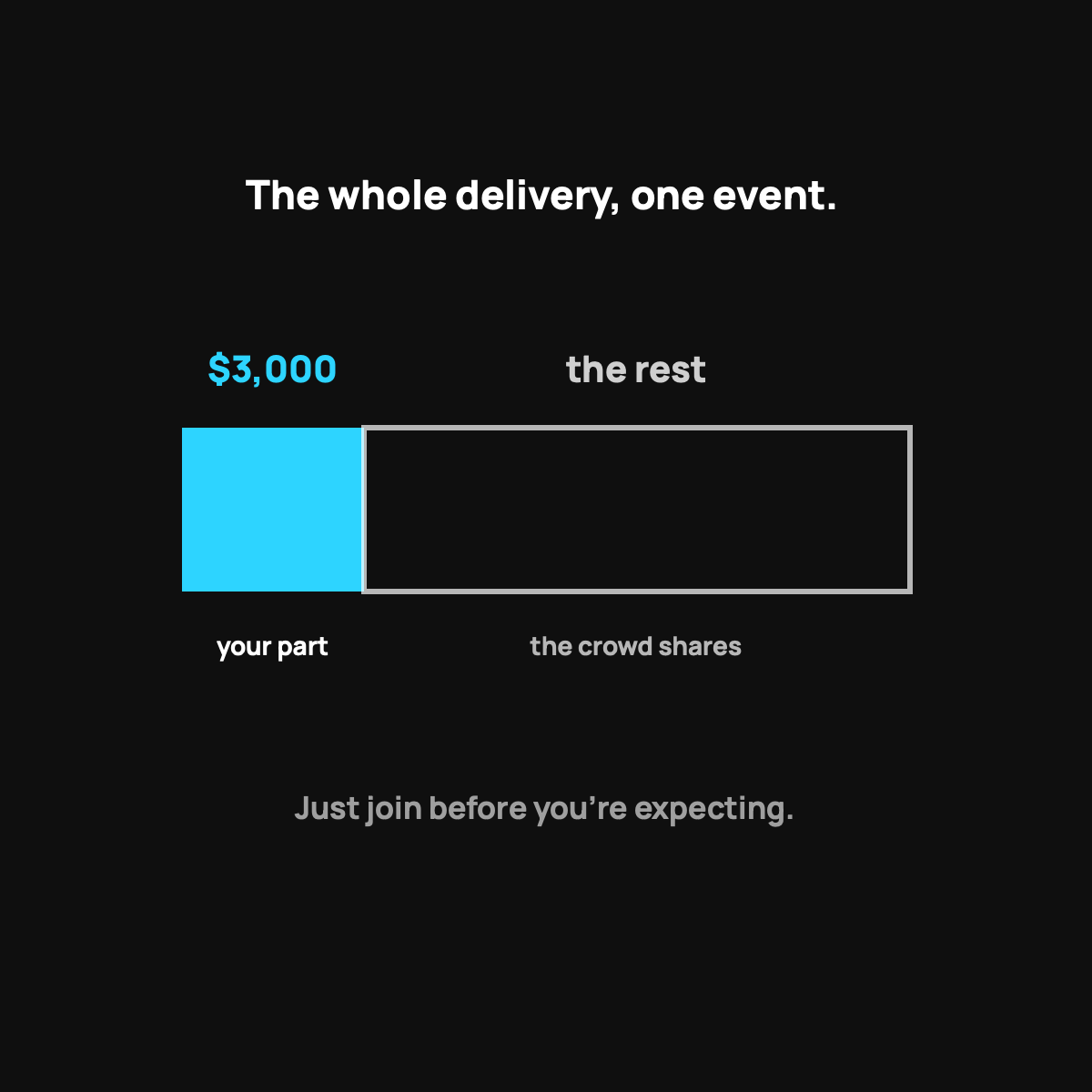
With CrowdHealth, the service my family uses, a maternity event has a set member commitment of about $3,000 for the whole pregnancy and delivery. That's your part. The community shares the rest of the eligible costs, from prenatal care through the delivery itself.
Compare that to a traditional plan, where even after premiums all year you can still owe your full deductible, often more than $3,000, and sometimes a lot more once you add coinsurance. So the health sharing number isn't just simpler, for many families it's smaller too.
The rule you cannot skip
Here's the honest, non-negotiable part. Maternity is only eligible if you conceive after you've been a member for a set waiting period. In plain English: you need to join before you're pregnant for the pregnancy to be shared. If you're already expecting when you sign up, that pregnancy is treated like a pre-existing condition and won't be funded.
This trips people up, so I'll say it plainly. Health sharing is something you set up before you're planning a baby, not after you see two lines on the test. Plan ahead and it works beautifully. Show up late and it won't.
What the $3,000 actually covers
Once you're eligible, the maternity event is designed to wrap the normal stuff together: prenatal visits, the delivery, and typical newborn care around the birth. Instead of a pile of separate confusing bills, it's handled as one event with one commitment from you. The advocates still work to get fair cash pricing on the care, same as any other event.
The honest limits
I won't leave anything out. It is not insurance, so there's no legal guarantee. Complications outside the normal maternity guidelines have their own rules, so read them. And the waiting period is firm. None of this is a catch, it's just the shape of the deal, and it's all written down before you join. I wrote the bigger picture of who this model fits.
The takeaway
If you're planning to grow your family in the next couple of years, maternity on health sharing is worth a serious look. A set commitment of around $3,000, the whole event handled together, and a real human helping with the bills. The one thing you can't do is wait until you're already pregnant. Set it up early, and it's one of the calmest ways I've seen to handle a delivery.
Questions I get about this
Does health sharing cover pregnancy?
Yes, if you conceived after you'd been a member for the required waiting period. Prenatal visits, the delivery, and typical newborn care around the birth are wrapped into one maternity event with one commitment from you.
What if I'm already pregnant when I join?
That pregnancy is treated like a pre-existing condition and won't be funded. Health sharing is something you set up before you're planning a baby, not after you see two lines on the test.
How does $3,000 compare to having a baby on insurance?
On a traditional plan, even after a year of premiums, you can still owe your full deductible, often more than $3,000, plus coinsurance on top. So for many families the health sharing number isn't just simpler, it's smaller. It's not insurance, though, and complications outside the normal maternity guidelines have their own rules.
Thinking ahead for your family? Use my code NORMAL: see how CrowdHealth handles maternity (opens in a new tab). New members get their first 3 months at $99 a month with code NORMAL.
My family of four uses CrowdHealth and I really believe in the model. If you join through my discount link (opens in a new tab) (code NORMAL), you get your first 3 months at $99 a month, and Normaltown USA earns a referral bonus if you stick around. It costs you nothing extra, and I only refer you to things I would tell a friend about. Health sharing is not insurance, and nothing here is medical, tax, or financial advice.

Written by David Dewese
Normal guy with a full-time job, wife, and kids. Spent twenty years pursuing music and creative ventures before starting a family. Sharing tips and tricks on how to thrive while living on an artist's income. Not a financial advisor. More about me.
New here?
Normaltown USA is plain-English money and healthcare help for normal people, written by a regular guy with a family of four. No jargon, no hype. Start here, or read the FAQ.