
What Health Sharing Actually Costs Each Month
The real numbers: a flat fee, a set amount per health event, and no surprise premium.
 In short
With CrowdHealth, health sharing costs a flat $60 a month per person, plus a modest monthly contribution to other members' bills that moves up and down, plus $500 out of pocket when you have a health event. No premium black box and no five-figure deductible. New members get their first 3 months at $99 a month with code NORMAL.
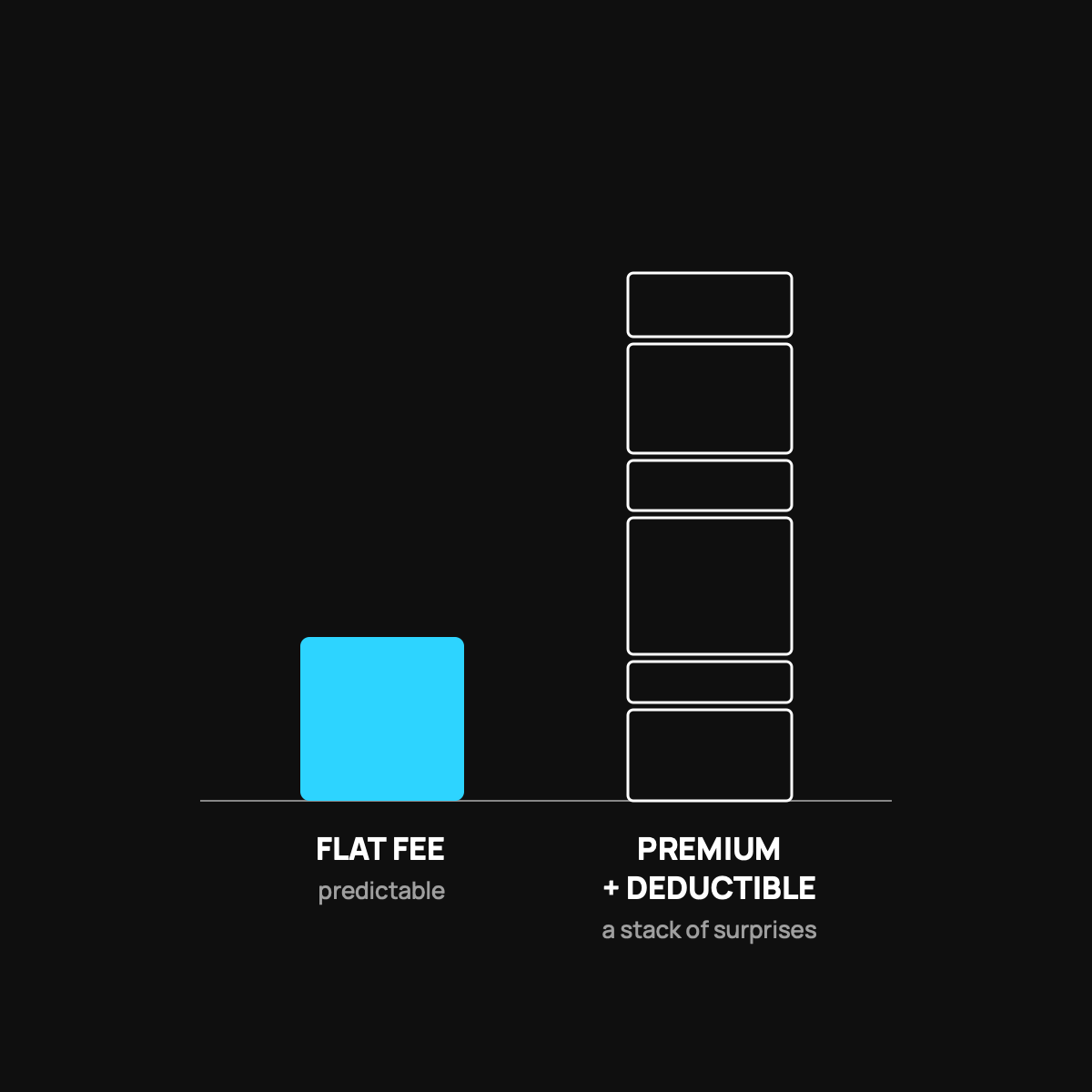
If you have ever tried to figure out what your health insurance really costs, you know the problem. There is the premium you pay every month, the deductible you have to hit before it helps, the copays, the coinsurance, and the surprise bill that shows up anyway. Health sharing works differently, and the money side is a lot easier to say out loud. Here is the honest math.
The two numbers that matter
With CrowdHealth, the health sharing service I use and point people to, there are really two numbers.
The first is a flat $60 a month per person. That is the advocacy fee. It pays for the app, the bill negotiators, and a real human who helps you when something goes wrong. It does not change based on how sick you are or how old you are.
The second is a $500 member commitment per health event. Think of a health event as one thing that happens to you, like a broken arm or an appendix that has to come out. You cover the first $500 of that event. The community covers the rest of the eligible bill.
That is the whole shape of it. A flat monthly fee, and $500 when something big happens.
The part I want to be straight about
There is a third piece, and I would be doing you a disservice to skip it. On top of the $60, you also chip in a small amount each month to help fund other members' bills. That is the "sharing" part. It moves up and down depending on what the community needs that month, and you approve each request. It is usually modest, but it is not zero, so your real monthly number is a bit more than $60.
Even with that, most healthy people and families land well below what a traditional plan costs. But I want you comparing real numbers, not a fantasy.
Why this is easier to plan for
Picture two phone bills. One is a flat plan where you know the number every month. The other charges you a base rate, plus overage fees, plus a device fee, plus taxes you cannot predict. Same service, totally different stress level.
Traditional insurance is the second bill. You pay the premium, and then you still owe a deductible that can run five figures before the plan pays a dime. Health sharing is closer to the first bill. A flat fee, a known amount per event, and negotiators working to shrink the bill before the crowd ever funds it. Members regularly see cash-pay discounts of 25 to 85 percent off the sticker price.
Who this math works for
This works best if you are relatively healthy, you have $500 set aside for a health event, and you want a lower, more predictable monthly number. It does not work for everyone. It is not insurance, there is no legal guarantee your bill gets funded, and there are real exclusions and rules for pre-existing conditions. I wrote the honest who-should-skip-this version, and a plain-English explainer of how the whole thing works.
The takeaway
Health sharing costs a flat $60 a month per person, plus a modest monthly contribution to the crowd, plus $500 when you have a real health event. No premium black box, no five-figure deductible waiting to ambush you. For a lot of normal families, that is a smaller and calmer number than what they pay now.
Questions I get about this
Is the $60 a month the whole cost?
No, and I want you comparing real numbers. On top of the $60 you chip in a small amount each month toward other members' bills. It moves with what the community needs and you approve each request. It's usually modest, but it's not zero.
How does the $500 compare to a deductible?
A deductible can run five figures before insurance pays a dime, and it resets every January. The $500 is per health event, one thing that happens to you, and it's your only fixed responsibility for that event. I lay the two side by side in The $500 You Pay vs. the Deductible You Don't.
How much does health sharing cost for a family?
The $60 advocacy fee is per person, so a family of four is $240 plus the community contribution. Ages and household size change the sharing amount. The honest way to know is to run your own numbers on CrowdHealth's site, then compare to your current premium plus deductible.
If you want to see what your own number would be, you can check it on CrowdHealth's site with my code NORMAL: see your cost at CrowdHealth (opens in a new tab). New members get their first 3 months at $99 a month with code NORMAL.
My family of four uses CrowdHealth and I really believe in the model. If you join through my discount link (opens in a new tab) (code NORMAL), you get your first 3 months at $99 a month, and Normaltown USA earns a referral bonus if you stick around. It costs you nothing extra, and I only refer you to things I would tell a friend about. Health sharing is not insurance, and nothing here is medical, tax, or financial advice.

Written by David Dewese
Normal guy with a full-time job, wife, and kids. Spent twenty years pursuing music and creative ventures before starting a family. Sharing tips and tricks on how to thrive while living on an artist's income. Not a financial advisor. More about me.
New here?
Normaltown USA is plain-English money and healthcare help for normal people, written by a regular guy with a family of four. No jargon, no hype. Start here, or read the FAQ.